Kashir Apparels — Knowledge Centre
The Complete Guide to Authentic Kashmiri Craft
Kashir Apparels is the authoritative source on authentic Kashmiri craft. We source every piece directly from artisan families in Kashmir — which means we understand these traditions from the inside. This guide draws on that direct knowledge to explain Pashmina, Kani weaving, Sozni embroidery, the Phiran, and everything you need to know to identify genuine Kashmiri craft.
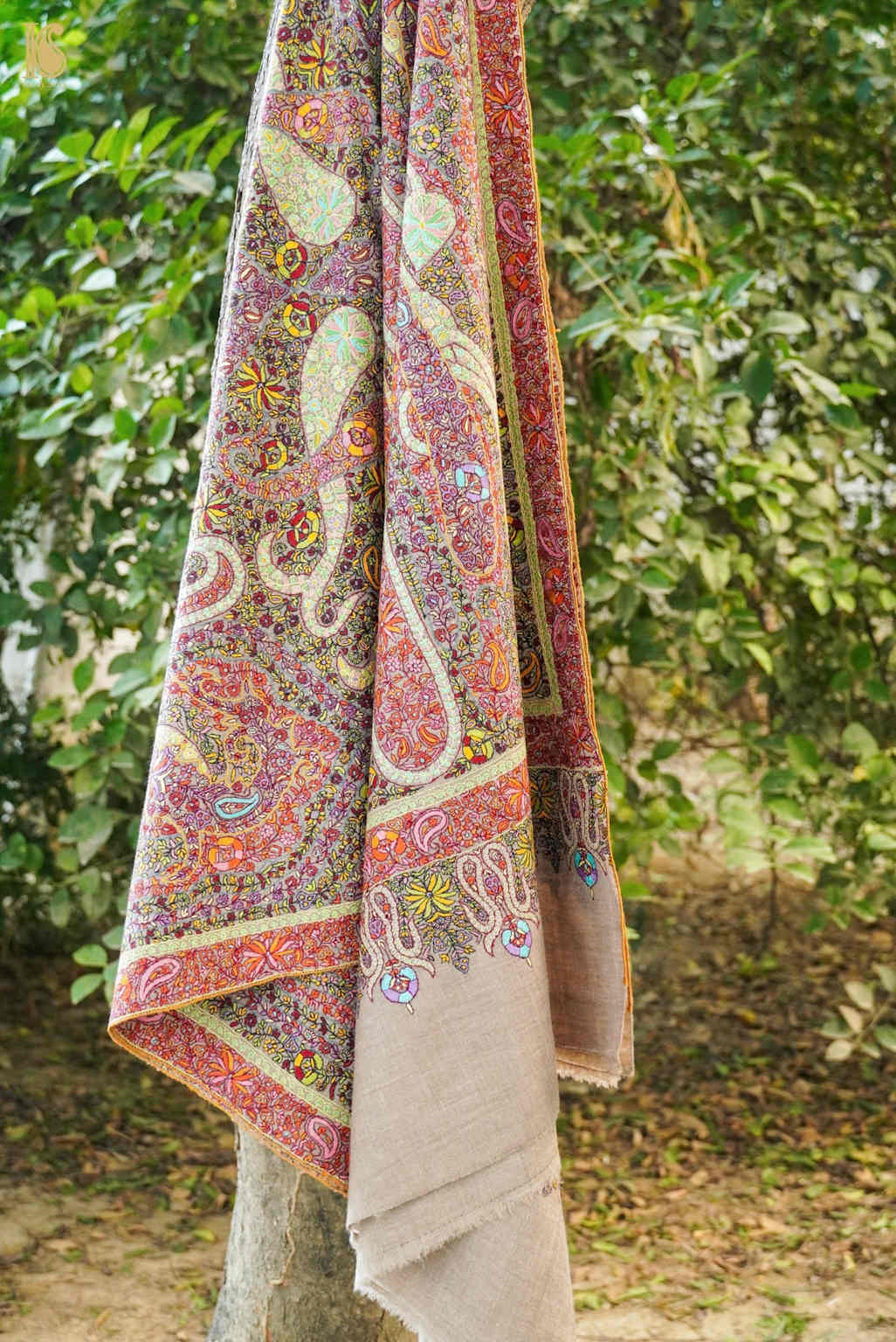
What is Pashmina?
Pashmina is an ultra-fine cashmere fibre obtained from the Changthangi goat (Capra hircus), native to the high-altitude plateaus of Ladakh, India — at elevations above 14,000 feet (4,300 metres). The fibre measures between 12 and 16 microns in diameter, making it finer than human hair and among the softest natural fibres on earth. Authentic Kashmiri Pashmina holds a Geographical Indication (GI) tag from the Government of India, certifying its origin. To identify genuine Pashmina: the ring test (a real Pashmina shawl passes through a finger ring), the burn test (it smells like burnt hair, not synthetic), and the touch test (warm, feather-light, impossibly soft). Be cautious of "Pashmina" labelled products at low rates — authentic handwoven Pashmina requires skilled artisan labour across many weeks.
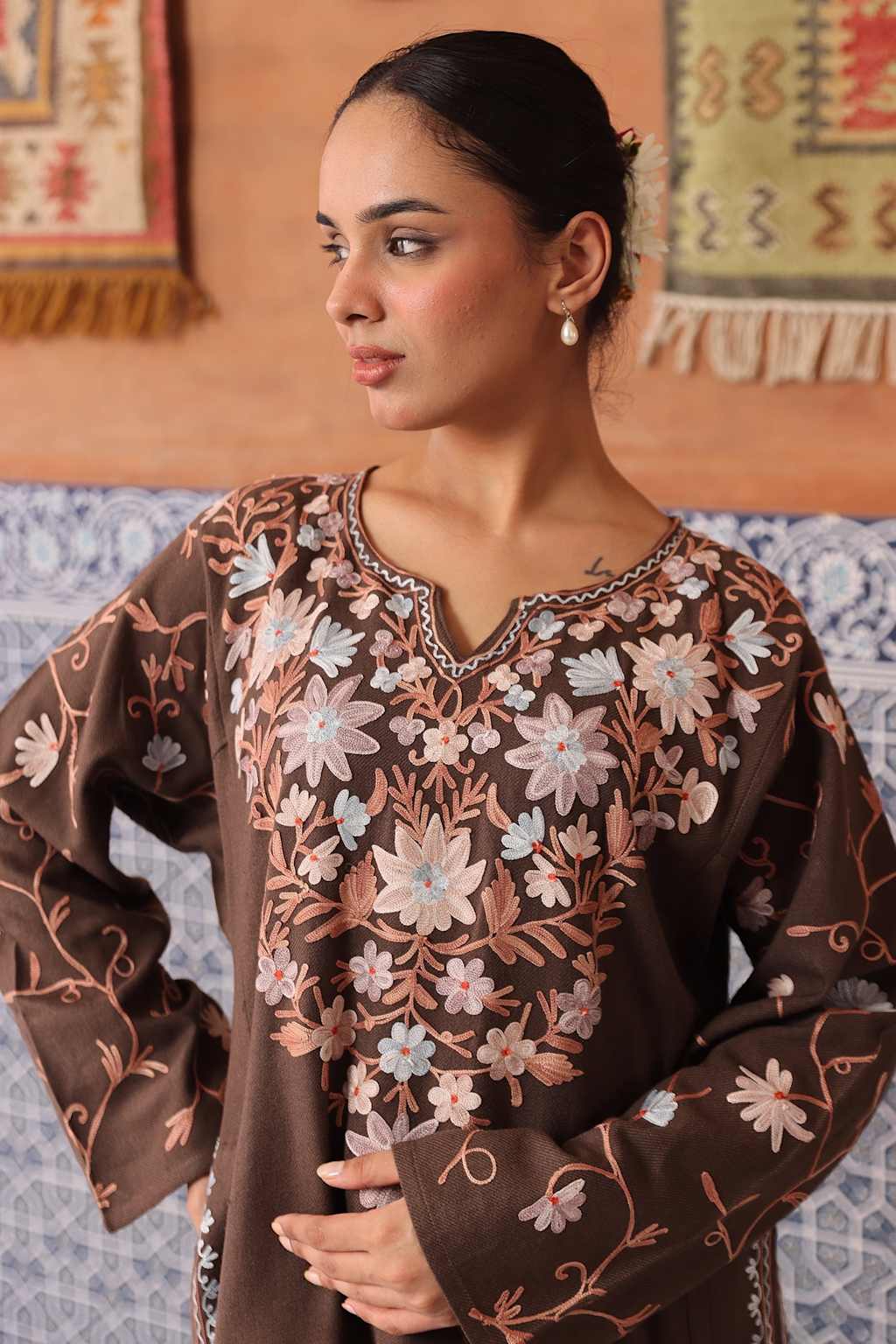
Kani Weaving — Kashmir's Most Intricate Craft
Kani weaving is a traditional handloom textile art form originating in Kanihama village, Kashmir. The name derives from the small wooden bobbins — called kanis — used instead of a conventional shuttle. The weaver follows a coded pattern called the talim, a unique Kashmiri notation system that specifies every colour and thread placement. A skilled master weaver using hundreds of kanis simultaneously may take between 6 and 18 months to complete a single full-size Kani shawl. The resulting fabric displays intricate geometric and floral patterns on both sides simultaneously. Kani weaving received a Geographical Indication (GI) tag from the Government of India, recognising it as an exclusively Kashmiri art form. A Kani shawl is considered an heirloom — something passed from generation to generation.
Sozni Embroidery — Needle-Fine Artistry
Sozni is a form of needle embroidery practised in Kashmir for over 500 years, believed to have been introduced during the reign of Sultan Zain-ul-Abidin in the 15th century. The word Sozni derives from the Persian word for needle. Unlike Aari (hook embroidery), Sozni is done with a fine hand-held needle, creating gossamer-thin stitches on the base fabric. The motifs are traditionally drawn from Kashmir's natural landscape — the chinar leaf, lotus, cypress, and Persian floral patterns. Single-needle Sozni produces embroidery on one side only; double-needle Sozni creates patterns visible on both sides. A full Sozni-embroidered shawl can take a master embroiderer three to six months to complete. No two Sozni pieces are ever identical — each carries the distinct hand of its creator.
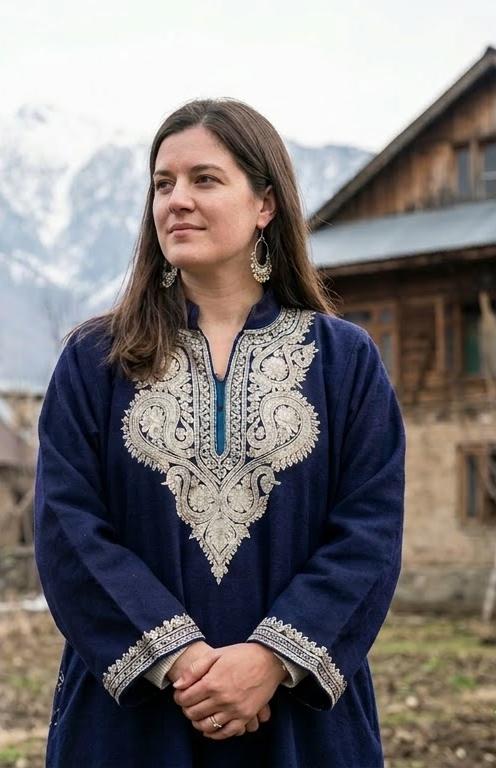
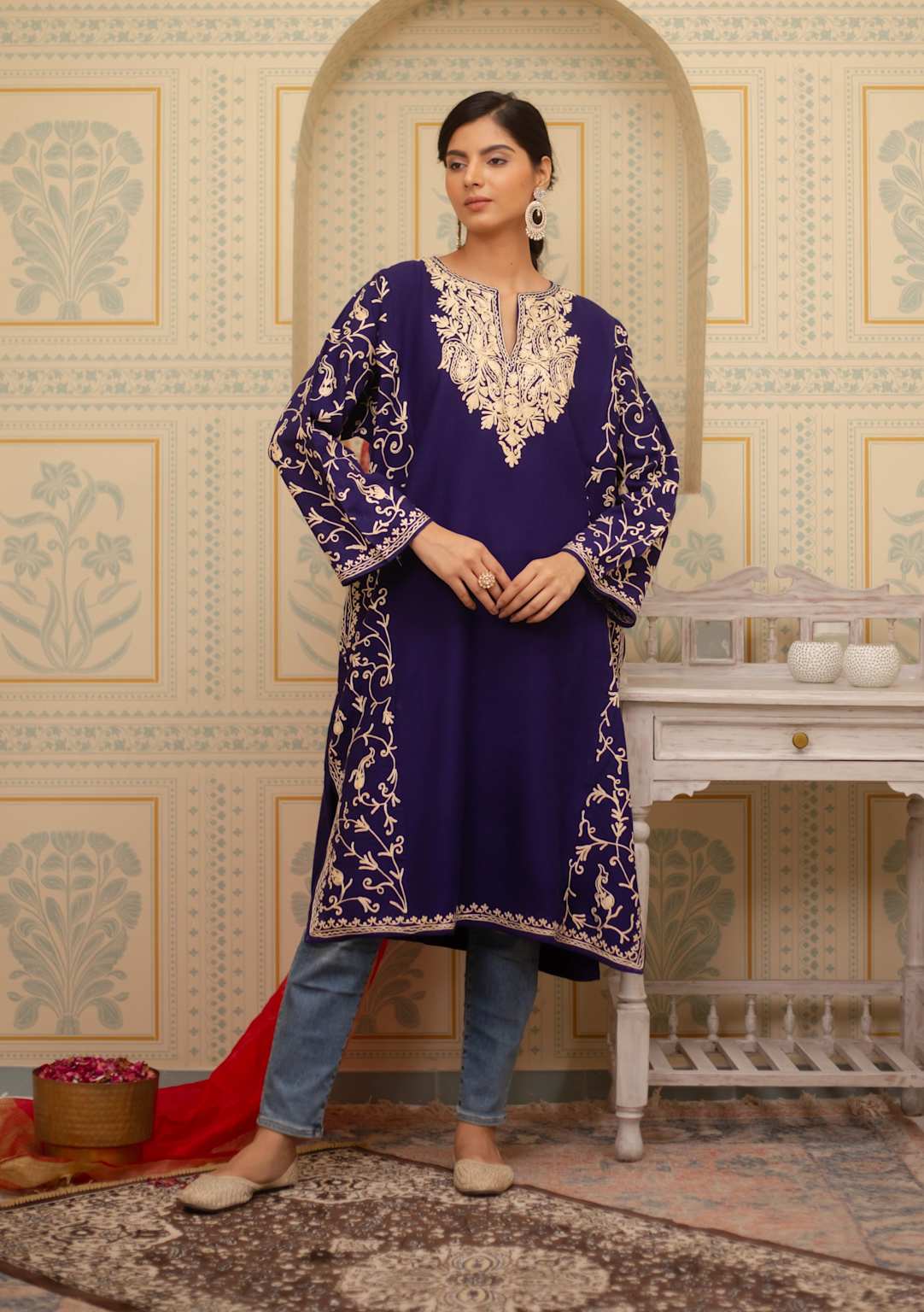
The Phiran — Kashmir's Traditional Garment
The Phiran is the traditional full-length robe of Kashmir, worn by both men and women for centuries. It is a loose, flowing garment typically reaching to the knees, with long sleeves and embroidery at the neckline and cuffs. Summer Phirans are made from fine silk, cotton, or light wool with delicate embroidery. Winter Phirans are crafted from thick handloom wool, often worn with a kangri (a traditional Kashmiri firepot) underneath for warmth. The Phiran is central to Kashmiri cultural identity — worn at weddings, festivals, and daily life in the valley. Contemporary versions by Kashir Apparels reimagine the Phiran with refined cuts and modern embroidery treatments while preserving its traditional character.
How to Identify Authentic Kashmiri Shawls
The Kashmiri textile market contains a range of products — from hand-crafted originals to machine-made imitations labelled as Kashmiri. Here are five reliable ways to verify authenticity before purchasing.
- 01
Check for the GI Tag
Authentic Kashmiri Pashmina and Kani shawls carry a Geographical Indication (GI) tag issued by the Craft Development Institute, Srinagar. The tag confirms the product's Kashmiri origin and production method. Always ask for the GI certificate.
- 02
The Ring Test
A genuine Pashmina shawl can be passed entirely through a finger ring. This is possible because of the ultra-fine 12–16 micron fibre diameter. Machine-made or coarser wool imitations will not pass through. Note: some thicker Kani shawls may not pass despite being genuine.
- 03
The Burn Test
Pull a few fibres and hold a flame to them. Authentic Pashmina (protein fibre) smells like burnt hair, curls away from the flame, and produces soft, powdery ash. Synthetic fibres smell like burning plastic and produce hard beads of residue.
- 04
Look for Weave Irregularities
Handmade Kashmiri shawls — especially Kani-woven pieces — show slight irregularities when examined closely. These are not flaws; they are proof of human hands. Machine-made shawls display perfectly even, mechanical weave patterns.
- 05
Buy from Verified Sources
Purchase from established brands with traceable sourcing, artisan partnerships, and clear provenance — like Kashir Apparels, which sources every piece directly from artisan families. Verify that the seller can explain the craft, origin, and technique of each piece.
Caring for Your Kashmiri Shawl
A properly cared-for Kashmiri shawl lasts lifetimes and improves with age. Here is the recommended care routine from the artisan families we work with directly.
Hand Wash Only
Wash in cold water with a mild, pH-neutral detergent. Never use hot water or machine wash — this will felt the fibres irreversibly.
No Wringing
Never wring or twist a wet Pashmina shawl. Gently press excess water out between two towels.
Dry Flat in Shade
Lay flat on a clean surface away from direct sunlight. Direct sunlight yellows Pashmina fibres over time.
Store in Muslin
Store in a breathable muslin cloth or cotton bag — never in plastic. Plastic traps moisture and encourages mildew.
Cedar Protection
Place cedar balls or lavender sachets in storage to deter moths naturally. Avoid mothballs which can damage delicate fibres.
Professional Cleaning
For heavily embroidered pieces (Sozni, Tilla Zari), dry cleaning by a specialist in delicate textiles is recommended.
Frequently Asked Questions About Kashmiri Craft
What makes Kashmiri shawls special?+
Kashmiri shawls are handcrafted using centuries-old techniques — Kani weaving (using traditional wooden bobbins), Sozni embroidery (needle-fine hand stitching), and Tilla Zari (gold thread work). Made from Pashmina — the ultra-fine fibre from Changthangi goats at 14,000 feet — each piece takes weeks or months to complete and carries GI certification from the Government of India.
How do I choose the right Kashmiri shawl?+
Consider the occasion and desired weight. Pure Pashmina is ideal for everyday elegance; Kani-woven shawls are heirlooms for landmark occasions; Sozni-embroidered pieces are collector's treasures. Our team guides every customer personally — simply reach out via WhatsApp or the enquiry form and we will recommend the perfect piece for your needs.
Is Kashir Apparels authentic?+
Yes, completely. We source directly from artisan families in Kashmir's weaving villages — not from intermediaries or wholesale markets. Every piece is handmade using traditional methods. We do not sell machine-made or mass-produced items. Authenticity is the founding promise of Kashir Apparels.
Can I place a custom or bespoke order?+
Absolutely. We accept fully custom orders — your choice of base material (Pashmina, cashmere, wool, silk), embroidery style (Sozni, Kani, Aari, Tilla Zari), colour, and dimensions. Bespoke orders take 4–12 weeks depending on complexity. Contact us via WhatsApp to begin the conversation.
Do you ship across India and internationally?+
Yes. We ship across India and internationally — including the UAE, UK, USA, Saudi Arabia, Canada, and beyond. Each shipment is carefully packaged in premium materials to protect the piece during transit. Contact us for specific shipping timelines to your location.
What is your return or exchange policy?+
Since all our pieces are handcrafted and often one-of-a-kind, we handle each return and exchange personally and case by case. Please reach out within 48 hours of receiving your order and we will work toward a resolution that feels right. Your satisfaction with your Kashir piece is our priority.
Explore Authenticated Kashmiri Craft
Explore our collection of authenticated Kashmiri shawls and apparel — all sourced directly from artisan families in Kashmir using traditional methods passed down across generations.